October 30, 2026
What to Expect During Your First Massage Therapy Session
October 30, 2026
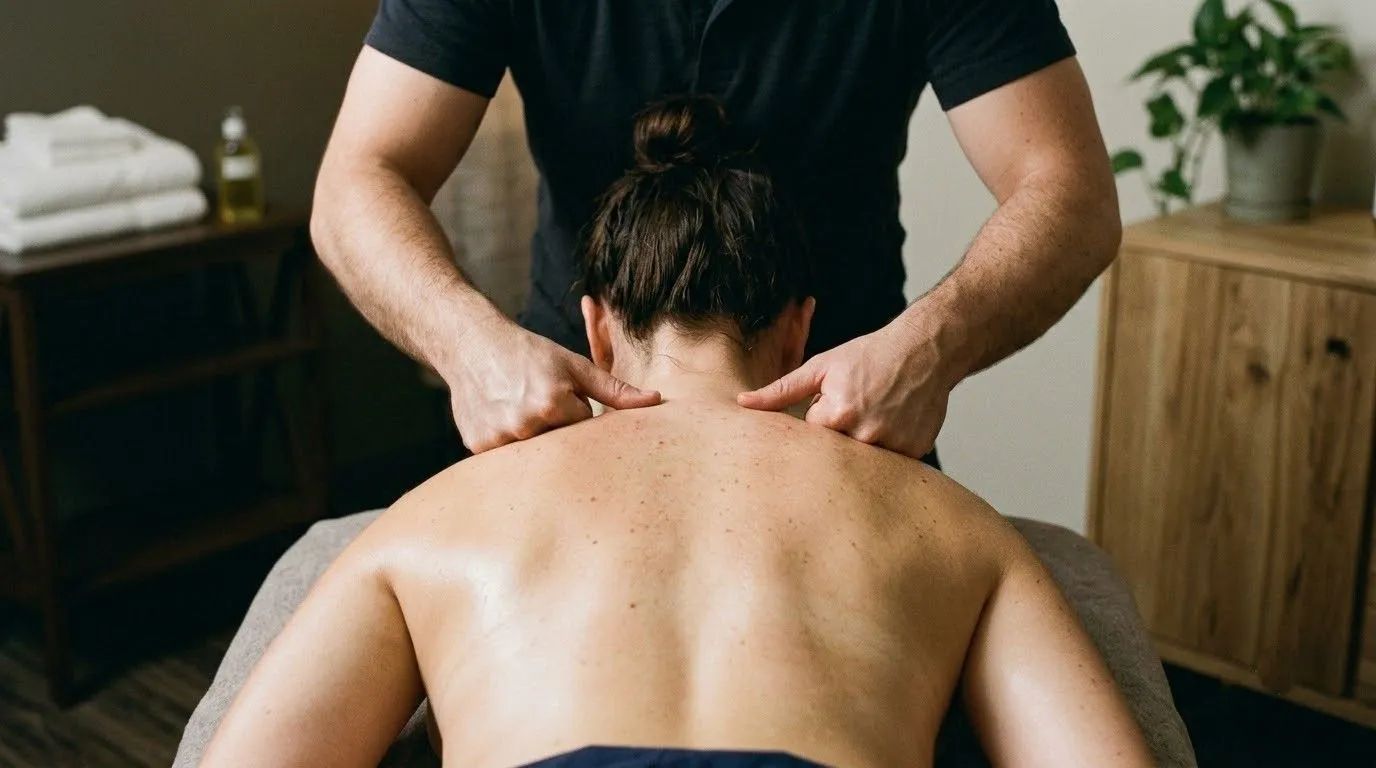
QUICK ANSWER: A first massage therapy session usually begins with a short conversation about your health history and goals, followed by time on a padded table under a sheet or blanket, with only the area being worked on uncovered. You choose how much clothing to remove, you can ask for lighter or firmer pressure at any moment, and you decide whether the room stays quiet or you chat. The American Massage Therapy Association describes a health intake discussion, appropriate draping, and the right to adjust pressure at any time as standard parts of a professional session. The National Center for Complementary and Integrative Health notes that massage appears to carry few risks when performed by a trained practitioner, and it advises talking with your health care provider first if you are unsure massage suits you. Most first visits run 60 or 90 minutes, including the intake, and a good therapist explains each step before it happens.
Most people who feel nervous about a first massage are not worried about the massage itself. They are worried about everything around it. Where do I put my shoes? Do I take my clothes off? What if I do not know what pressure I like? What if I fall asleep, or cannot stop talking, or my stomach growls in a quiet room? Those questions are completely ordinary, and every one of them has a simple answer.
Across the Tampa Bay area, many people put off booking a first appointment for months because the unknown feels bigger than the benefit. Someone in Brandon finishes another long week of driving I 75 and keeps meaning to call. A teacher in Temple Terrace carries tight shoulders through every school year. A runner in Riverview wonders whether a recovery session would even make sense. The hesitation is usually the same: not knowing what the hour will actually look like.
This walkthrough follows a first session from start to finish, in the order it happens, so nothing about the visit comes as a surprise.
Before You Book: Decide What You Are Hoping For
You do not need a perfect plan before your first appointment, but a rough idea of your goal makes everything easier. Most first time clients land in one of a few groups. Some want to relax and quiet a busy mind. Some want attention on a tight neck, shoulders, or lower back after long days at a desk. Some are active and want recovery support. Others are expecting a baby or recently had one, and want a session designed around that stage.
A licensed massage therapist can offer a range of approaches, and a studio with many modalities gives you room to start gently and adjust. Flowing Swedish strokes are a common first choice for general relaxation. Slower, firmer work suits people who already know they carry stubborn tension. Fully clothed styles such as reflexology, Reiki, Shiatsu, and Tok Sen, a northern Thai technique that uses a wooden mallet and peg in a rhythmic tapping pattern, are good options if undressing is the part that worries you.
When you contact the studio, mention your goal in a sentence or two. "I sit all day and my upper back feels tight" is plenty. You are not expected to use technical language or to diagnose anything. Your therapist will take it from there.
Before You Arrive: Small Preparations That Help
A few simple habits make the session more comfortable.
Drink Water Earlier In The Day
Arriving hydrated feels better than arriving thirsty. Tampa's heat and humidity make drinking water especially important from late spring through early fall.
Eat Lightly
A large meal before lying on your stomach can feel uncomfortable. A small snack an hour or two beforehand is usually sufficient.
Arrive A Few Minutes Early
Arriving early gives you time to settle instead of rushing from busy South Tampa streets directly into your session.
Wear Something Easy To Change In And Out Of
Loose, comfortable clothing makes changing easier and helps you feel comfortable before and after your massage session.
Skip Heavy Perfume Or Cologne
Many studios keep rooms lightly scented or unscented. Strong fragrances can bother both therapists and other clients during treatments.
Gather Your Health Information
Note medications, recent injuries, surgeries, or ongoing conditions beforehand. Sharing accurate information helps your therapist understand relevant considerations before treatment.
The Intake Conversation: Your Voice Comes First
Every professional massage begins before you reach the table. According to the American Massage Therapy Association, a client can expect a health intake conversation about medical conditions and expectations, along with an explanation of the techniques the therapist plans to use. Many studios start with a short form and then talk it through with you in person.
Expect questions along these lines: Do you have any injuries or areas of concern? Are you pregnant? Do you take medication that affects circulation or blood clotting? Are there areas you would like avoided? How firm do you usually like pressure? Do you have sensitivities to oils, lotions, or scents?
Answer honestly, even when a question feels personal. This is not a medical exam, and your therapist is not diagnosing anything. The questions exist so the session can be planned safely around your body. A therapist with more than twenty years of experience, as we have, learns quickly that two people reporting the same sore shoulder may need entirely different sessions, and the conversation is where that difference shows up.
If a health condition makes you unsure whether massage is a good fit, this is the moment to say so. The National Center for Complementary and Integrative Health advises people not to use massage therapy to postpone seeing a health care provider about a medical problem, and suggests discussing concerns with your provider if you are unsure whether massage is appropriate for you. Massage is a wellness service that complements medical care. It does not replace it.
This conversation is also where you can state your preferences about the room. You have the right to decide whether there will be conversation, music, or quiet, and to say so plainly. Nobody will be offended by a request for silence or for a different playlist.
Getting Ready on the Table
Once the conversation is finished, the therapist steps out so you can get settled. This is the part most first time clients wonder about most, and the answer is reassuring.
You Choose Your Level Of Undress
You decide how much clothing to remove based on comfort. Some people keep underwear on, while fully clothed sessions require minimal adjustment.
You Are Draped The Entire Time
Professional draping keeps you covered throughout treatment, with only the area being worked on uncovered. This protects privacy and maintains comfort.
The Table Is Padded And Often Warmed
You may lie face down with a cushioned face cradle or face up with knee support. Pillows and side lying are also available.
You Will Have A Moment To Settle
Take a few slow breaths and get comfortable. A soft knock means the therapist is checking whether you are ready before entering.
During the Session: Pressure, Pace, and Conversation
Once the work begins, a good therapist usually starts lightly to warm the tissue and learn how your body responds. The opening minutes are partly assessment. The hands are reading where muscles feel tight, where they feel guarded, and where they feel at ease.
Pressure Is Yours To Adjust
This is the single most important thing to remember. Pressure is a conversation, not a test. The AMTA lists the ability to request adjustments to pressure at any time as one of the rights of every client. If the pressure is too firm, say "lighter, please." If it is too light, say "a little deeper is fine." A clear sense of too light, just right, or too much is all the information your therapist needs.
Many first time clients assume that firmer is better, or that discomfort proves the work is happening. In our experience, the opposite is closer to the truth. When pressure becomes too intense, muscles tend to tighten in response, which works against the goal of releasing tension. Slow, steady pressure that you can breathe through is usually more effective than force.
What It Feels Like
Depending on the style, you might feel long gliding strokes, kneading, slow sustained pressure on a tight spot, gentle stretching, or light rhythmic tapping. A fully clothed session might involve soft compression through a blanket or sheet. A good session also includes periods of simple stillness, when the hands rest and let the body settle.
Some sensations are normal. A tight muscle may feel tender while it is being worked, a "good ache" that eases as the tissue relaxes. Sharp, burning, or electric sensations are not normal, and you should speak up immediately.
Talking, Silence, And Falling Asleep
Some people chat for the entire hour. Others go quiet within five minutes. Both approaches are welcome. If you would like to talk, share whatever is on your mind. If you would rather not, you can say "I would like to stay quiet today," and the room will respect that.
Falling asleep is common, and it is generally taken as a sign you felt comfortable. You will not be judged for it. Snoring, drooling, and sudden jerks as you drift off are all things a therapist has seen many times and thinks nothing of.
TIP: Tell your therapist about anything that feels off while it is happening rather than waiting until the end. Cold feet, a stuffy nose, a pillow in the wrong spot, or a spot that feels too tender are all easy to fix in seconds. A quick mention usually improves the rest of the hour.
Common First Session Worries, Answered Plainly
"What if I am ticklish?" Tell your therapist. Pressure can be adjusted, or a ticklish area can be skipped or approached differently. Firmer, steadier contact often feels less ticklish than a light touch.
"What if I have not shaved or showered?" Nobody expects a particular grooming standard. Therapists work with all kinds of people every day. Arriving clean and comfortable is polite, but nobody inspects you.
"What if I feel emotional?" Occasionally, deep relaxation brings up a wave of emotion, tears, or a sudden sense of release. It is not unusual and does not mean anything has gone wrong. Your therapist will not be alarmed.
"What if my body is not what I think it should be?" Therapists focus on how your muscles feel and how your body moves, not on appearance. A calm, accepting studio is part of what a good practice provides.
"What if I need the restroom mid session?" Say so. You can pause at any time, wrap in a robe or sheet, and step out.
"What if something feels inappropriate?" The AMTA states that clients have the right to stop a massage and report anything they feel is inappropriate. A professional therapist welcomes that boundary and will never push against it.
Special Situations to Mention Up Front
Some circumstances deserve a clear heads up before the session starts.
Pregnancy And Postpartum
Prenatal massage is commonly offered after the first trimester, using supported side lying and gentle pressure. High-risk pregnancies or cesarean deliveries require medical clearance before massage.
Recent Injuries Or Surgery
Tell your therapist about recent injuries or surgeries, including timing and location. Depending on your recovery, they may avoid areas, adjust pressure, or recommend waiting.
Medications And Circulation
Certain medications and circulation concerns may require modified pressure or techniques. Tell your therapist about relevant medications and circulatory issues before your session begins.
Skin Sensitivities
Tell your therapist about reactions to oils, lotions, or fragrances. Some techniques, including myofascial release, can be performed without oil to reduce potential skin irritation.
Ongoing Medical Care
Massage should complement your medical care rather than replace professional guidance. If you have concerns about treatment, discuss them with your doctor beforehand.
WARNING: Do not use massage to put off seeing a doctor about symptoms that are new, severe, or getting worse. Persistent pain, swelling in one leg, unexplained numbness, or anything that feels alarming deserves a medical evaluation before any bodywork. A massage therapist can support your wellness, but cannot diagnose or replace medical care.
After the Session: What Most People Notice
When the hour ends, the therapist steps out again so you can dress at your own pace. Take your time sitting up. Many people feel a little slow or lightheaded when they rise too quickly after lying still for an hour, so move gradually.
Common experiences afterward include a feeling of looseness through the shoulders, an easier posture, a quieter mind, and a pleasant tiredness. Some people feel energized instead. Some notice mild tenderness the next day, similar to the feeling after a gentle workout, especially if the pressure was firmer than they are used to. That usually settles within a day or two.
A few habits make the hours after a session more comfortable:
Drink Water
Hydrating is a simple, sensible habit after any session.
Move Gently
A short walk along Bayshore or around your neighborhood keeps things easy without strenuous activity.
Give Yourself A Quiet Evening If Possible
Rushing straight into a hectic schedule undoes some of the calm you just built.
Notice What Changed
Which areas felt better? Which still feel tight? Pass that along to your therapist next time, and the work can be refined.
Ask About Simple Home Care
A good therapist can suggest stretches or posture adjustments that fit your daily routine, so the effects of the session carry into your week.
How Often Should You Come Back?
There is no universal answer. Someone using massage for general relaxation may find an occasional visit enough. Someone working with a specific area of tension, or training regularly, may prefer visits spaced closer together at first. A thoughtful therapist will talk through options after your first session, based on how your body responded and what your schedule allows, rather than handing you a fixed plan.
Frequently Asked Questions
Do I have to undress completely for a massage?
No. You undress only to your comfort level and stay draped throughout. Shiatsu, Reiki, reflexology, and Tok Sen are done fully clothed, making them good options if undressing makes you uneasy.
How long does a first massage session last?
Most sessions run 60 or 90 minutes, and the intake conversation often counts toward that time. A shorter session is a gentle introduction, while a longer one avoids feeling rushed.
What if I do not know what pressure I like?
Start light and tell your therapist what you notice. Pressure can be adjusted at any time, and most people find their preference within the first few minutes of the work.
Is it normal to feel sore after a first massage?
Mild tenderness the next day is common, especially after firmer work, and usually fades within a day or two. If soreness is sharp or lingers, contact your therapist and consider checking with your doctor.
Can I talk during my massage, or should I stay quiet?
Either is fine. Some people talk throughout, others prefer silence, and you can change your mind midway. Your therapist will simply follow your lead and respect whatever feels right to you.
Should I tell my doctor before booking a massage?
If you have a health condition, are pregnant, are recovering from surgery, or feel unsure, check with your provider first. For healthy adults seeking relaxation, a history conversation with your therapist is usually enough.
Walking Into Your First Massage Feeling Prepared
A first massage becomes much less intimidating once you know its shape: a short conversation, a comfortable setup, pressure that you control, and quiet time afterward to settle. Nothing about the hour requires the right words or instant ease. It only asks you to be honest about what you want and to speak up when something could be better. Do that, and the unknown shrinks quickly, leaving an hour of attentive care and a body that feels more at home in itself.
Hyde Park Massage
in Tampa, FL, draws on 20
years of experience in guiding first time clients through this process. Every session starts with listening, because two people with the same sore shoulder often need very different work. Clear draping, adjustable pressure, and a calm room let nervous clients relax sooner than they expect. Many leave surprised by how simple the visit felt. They also tend to understand their own bodies a little better by the time they stand up.