
Deep Tissue Massage
DEEP TISSUE MASSAGE IN TAMPA, FL
In 2017, the American College of Physicians named massage among the first non-drug treatments to try for acute and subacute low back pain. At Hyde Park Massage, our deep tissue massage in Tampa, FL, puts that option to work on the layers beneath the surface, using slow, controlled pressure that reaches deep muscle and connective tissue, sustained holds on adhesions, and trigger point techniques wherever knots refuse to release. This therapeutic massage addresses chronic neck and shoulder tension, lower back tightness from years of sitting, repetitive strain, and postural fatigue, and every session begins with an assessment so pressure builds only as fast as your tissue allows.


PRESSURE THAT WORKS WITH YOUR BODY, NOT AGAINST IT.
Plenty of people believe deep tissue work has to hurt to help. It does not. When pressure arrives too fast, muscles brace, guard, and push back, and the session turns into a standoff. We warm the outer tissue first, then sink in gradually, holding specific areas for several seconds so your nervous system can let go instead of fighting the contact.
The result is firm, sustained pressure that never turns sharp, with regular check-ins so you always control the depth. That steady communication is what separates lasting relief from temporary numbness.
✓ Assessment before every session
✓ Pressure matched to your tolerance
✓ Trigger point work where knots appear
✓ Aftercare guidance for the next 2 days
DEEP TISSUE MASSAGE
SHOULDERS LOCKED TIGHT FOR MONTHS CAN FINALLY DROP.
Chronic tension rarely arrives overnight. It builds through long desk days, heavy lifting, workouts without recovery, and the same motion repeated thousands of times a week. Deep tissue massage targets the muscle layers that standard relaxation strokes cannot reach effectively, softening adhesions that limit circulation and range of motion. After a focused session, shoulders often sit lower, the neck turns farther, and the everyday ache that followed you around starts showing up less often.
DESK DAYS, BAY RUNS, AND EVERYTHING BETWEEN.
South Tampa keeps bodies busy. Office workers spend long hours at a screen, runners and cyclists stack miles along Bayshore Boulevard, and parents haul kids, groceries, and gear from car to house. Each routine overloads different muscles. We map where your tension lives, then direct deep work to the neck, upper back, hips, or lower back your routine taxes most, so every minute on the table counts.
20 YEARS OF FINDING THE KNOT BEHIND THE ACHE.
We have spent 20 years working on South Tampa muscles, and one lesson keeps repeating: the spot that hurts is not always the spot that needs the work. A tight hip can pull on the lower back, and a trapezius knot can send pain toward the temple. Our assessment traces those patterns before deep pressure begins, so the session treats the source instead of chasing symptoms. Ready to learn what your shoulders have been holding?
WHAT FOCUSED DEEP TISSUE WORK DELIVERS.
LOOSER, LONGER MUSCLES
Muscles that have stayed contracted for months finally lengthen under slow, sustained pressure. That regained length takes strain off the joints they cross, so reaching overhead, checking a blind spot, or tying a shoe stops feeling like a negotiation.
MORE ROOM TO MOVE
Adhesions between muscle layers act like glue that limits how far a joint can travel. Working through them restores lost range of motion in the neck, shoulders, and hips, which makes workouts, yard work, and ordinary errands feel noticeably less restricted.
CIRCULATION WHERE IT STALLED
Tight tissue squeezes the small vessels running through it, which slows the delivery of oxygen and nutrients. Releasing that tension encourages local circulation, and clients often describe the treated area as warmer, softer, and less achy by the following day.
FEWER FLARE-UPS OF OLD PAIN
Stubborn tension tends to cycle, easing for a week and then returning with the next deadline or long drive. Consistent deep work can interrupt that loop, so pain becomes less frequent and less intense instead of waiting for the next bad week.
EASIER POSTURE AT THE DESK
Rounded shoulders and a forward head position load the upper back all day. Releasing tight chest and neck muscles lets your posture settle back toward neutral naturally, which reduces the fatigue that builds by midafternoon at a keyboard or behind the wheel.
RELIEF THAT OUTLASTS THE SESSION
Our goal is not an hour of pleasant numbness that fades on the drive home. Because pressure is applied slowly enough for muscles to truly release, the changes often hold for days and build with each visit in a structured series.
our services
OUR DEEP TISSUE MASSAGE WORK.
Every deep tissue session is built around the areas that bother you most. These are the focused approaches we combine, adjust, and repeat depending on what the assessment finds and how your tissue responds on the table.

NECK RELIEF
Neck and Shoulder Tension Work
Screen time, phone use, and stress all settle into the upper trapezius and the muscles along the neck. Slow, layered pressure releases those bands so your head feels lighter, turning comes easier, and the tight ridge across your shoulders softens.
BACK CARE
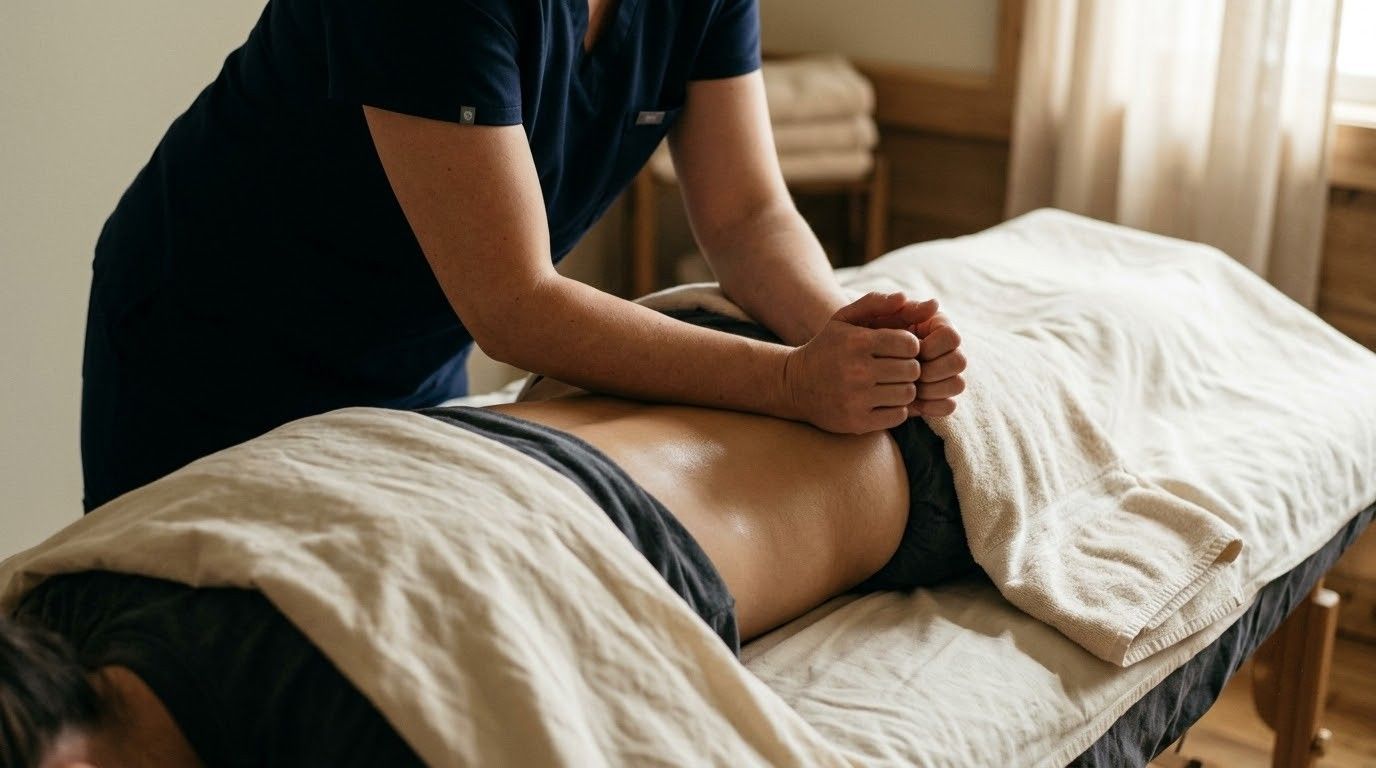
Lower Back Deep Tissue Sessions
Years of sitting shorten the hip flexors and overwork the muscles along the lumbar spine. We address the lower back together with the hips and glutes that pull on it, easing stiffness that shows up when you stand after a long meeting.

KNOT RELEASE
Deep Tissue With Trigger Point Techniques
When a knot refers pain elsewhere, general pressure is not enough. We locate the tender nodule, apply sustained compression until the tissue softens, then work the surrounding area with deeper strokes so the knot has less reason to form again.

POSTURE WORK
Postural Strain Relief
Posture problems are rarely about one muscle. We release the tight chest, neck, and hip muscles that pull you out of alignment and ease the overstretched back muscles working against them, helping you stand taller without forcing it or constantly correcting yourself.

STRAIN CARE
Repetitive Strain Sessions
Typing, lifting, swinging a racket, or working a mouse repeats the same motion until muscles lose their flexibility. These sessions target the forearms, shoulders, and upper back that absorb that load, restoring pliable tissue before overuse becomes a lingering injury or chronic ache.

SESSION SERIES
Chronic Tension Treatment Plans
Long-standing tension usually needs more than one visit. Many clients begin with three to four sessions spaced 1 to 2 weeks apart, then we reassess together. Each session builds on the last, so progress stacks up rather than resetting every time.
THE WORD ON OUR WORK
WHAT OUR CLIENTS SAY.
Read our Google reviews and the same words keep coming up: attention to knots, deep pressure applied with care, and clients who stopped searching after years of trying other therapists. We earn those reviews one session at a time, and every one of them is public for you to read.
FAQ
FREQUENTLY ASKED QUESTIONS.
Questions about deep tissue massage usually center on pressure, soreness, and safety. These answers help you walk into your first session knowing what is normal and what to tell your therapist.
Is deep tissue massage supposed to hurt?
No, deep tissue massage should feel firm and intense, never sharp or painful. Discomfort that makes you hold your breath or tense up means the pressure is too deep, and your therapist should ease off so the muscle can release.
What should you not do after a deep tissue massage?
Avoid intense workouts, heavy lifting, and hot soaks for the rest of the day, since treated muscles need time to settle. Skip alcohol that evening, drink water steadily, and keep moving with an easy walk instead of sitting for hours.
How long does soreness last after a deep tissue massage?
Mild soreness lasts 1 to 2 days and feels similar to the fatigue after a hard workout. Hydration, stretching, and a warm shower help it fade. Soreness that worsens after 3 days or feels sharp calls for a doctor visit.
How often should you get a deep tissue massage?
For chronic tension, sessions every 1 to 2 weeks work well at first, often for three to four visits in a row. Once the tissue responds and symptoms settle, most people shift to monthly maintenance that keeps patterns from rebuilding.
Who should not get a deep tissue massage?
People with blood clots, acute inflammation, a fresh injury, osteoporosis, or certain bleeding disorders should skip deep pressure or get medical clearance first. Recent surgery and some medications also call for gentler work, so share your health history before booking.
Is deep tissue massage good for lower back pain?
Yes, it can ease lower back pain from tight muscles, and physician guidelines list massage among first options for acute cases. At Hyde Park Massage in Tampa, FL, we treat the hips and glutes too, since they feed that strain.
Can deep tissue massage get rid of muscle knots?
Absolutely, sustained pressure can release most muscle knots, although stubborn ones may take several sessions. Hyde Park Massage in Tampa, FL, pairs deep tissue work with trigger point techniques, so knots that refer pain elsewhere get direct and patient attention.
What should you tell your therapist before a deep tissue massage?
Share any injuries, surgeries, medications, and health conditions, along with where you feel tension and what makes it worse. Mention pressure preferences and areas to avoid. That information shapes the whole session and keeps deep pressure both safe and effective.
HOW WE WORK
FROM FIRST QUESTION TO LOOSER SHOULDERS, HERE IS HOW.
STEP 01
WE ASK WHERE IT HURTS
Your session opens with a conversation about where you feel tight, sore, or limited, what makes it worse, and how long it has been going on. Those answers decide which areas get priority and how deep the work should go.
STEP 02
WE WARM THE OUTER LAYERS
Deep pressure on cold tissue invites guarding. We start with broader strokes that bring blood flow to the surface muscles and help them relax, which prepares the way for the deeper layers underneath to accept firmer contact without bracing.
STEP 03
WE SINK IN GRADUALLY
Pressure increases only as the tissue softens. The pace is intentionally slow, because slow contact lets your nervous system stay calm while the therapist reaches muscle layers that quick, forceful strokes would only push against and irritate.
STEP 04
WE HOLD THE STUBBORN SPOTS
Where adhesions or knots appear, we hold sustained pressure for several seconds at a time and add trigger point techniques as needed. That patience allows tight bands to release fully instead of rebounding the moment the pressure lifts away.
STEP 05
WE CHECK IN THROUGHOUT
You stay in control of the depth the entire time. We ask how the pressure feels, watch how the tissue responds, and adjust in real time, so the session remains intense enough to work but never sharp or overwhelming.
STEP 06
WE MAP THE NEXT STEPS
Before you leave, we explain what we found, what soreness to expect over the next 2 days, and how to support the work at home. If a short series makes sense, we outline a realistic schedule together.
BOOK YOUR SESSION
LET THE TENSION GO BEFORE IT SETTLES IN FOR GOOD.
Built-up tension gets harder to release the longer it sits, and every month of guarding teaches your muscles a new habit. Hyde Park Massage offers assessment-based deep tissue massage in Tampa, FL, with slow, deliberate pressure matched to your tolerance and a plan built around your goals. Sessions run 7 days a week from noon into the late evening, so relief fits your schedule. Use our online booking page or contact form to reserve your session today.
WHAT YOUR SESSION COVERS:
✓ A detailed intake conversation
✓ Warm-up work on the outer layers
✓ Slow, sustained deep pressure
✓ Trigger point release as needed
✓ Real-time pressure adjustments
✓ Aftercare and scheduling guidance