
Trigger Point Therapy
TRIGGER POINT THERAPY IN TAMPA, FL
A trigger point in the upper trapezius can send pain up the side of the neck to the temple and behind the eye, a referral pattern documented as a common contributor to tension headaches. Hyde Park Massage offers trigger point therapy in Tampa, FL, that finds those hidden sources through careful palpation, locating tender nodules and taut bands that reproduce your symptoms. We then apply sustained compression with fingers, thumbs, or elbows for 10 to 30 seconds until the tissue releases. This targeted trigger point massage addresses referred pain, radiating shoulder discomfort, recurring knots, and limited motion that stretching alone has not solved.

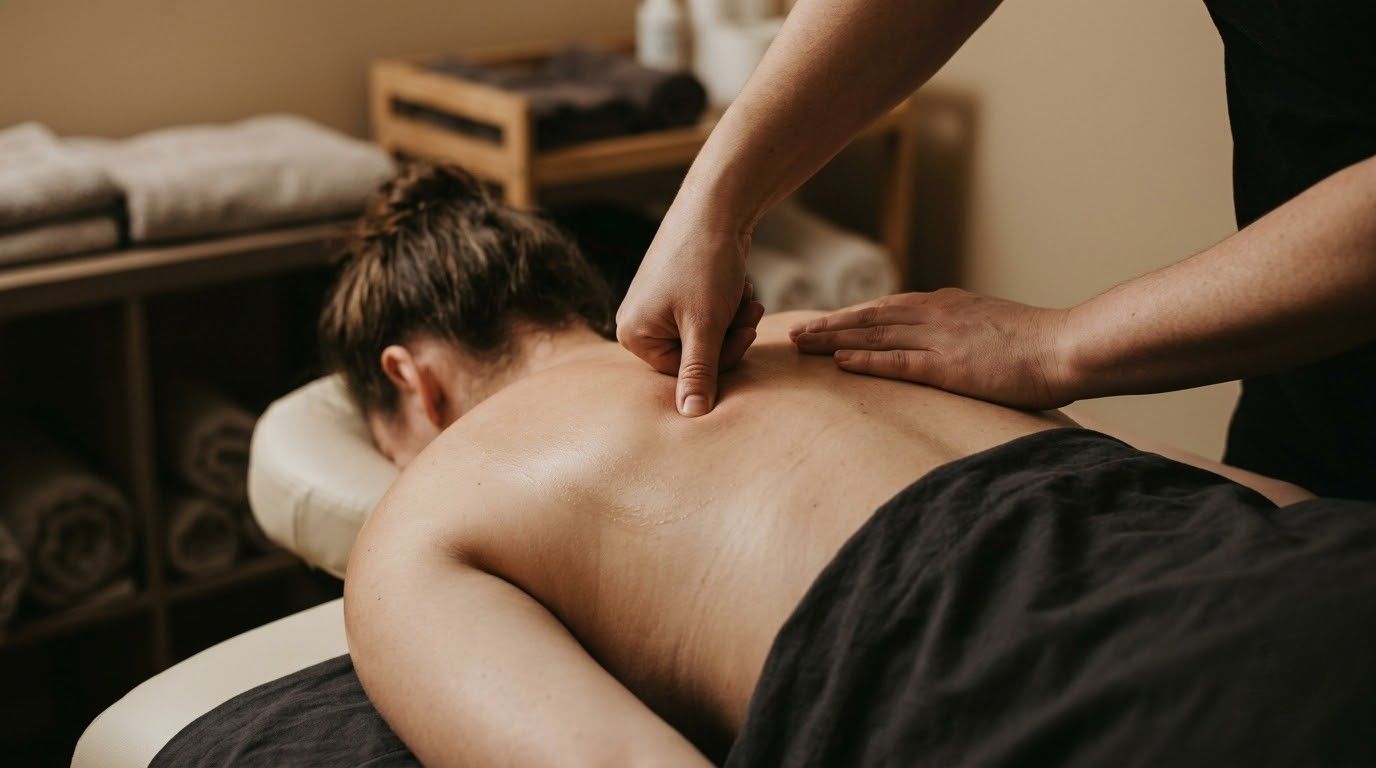
THE PROBLEM IS OFTEN SOMEWHERE ELSE.
Pain that shows up behind your eye, down your arm, or deep in your hip may not start there. Trigger points are hyperirritable knots within muscle that refer sensation to other areas, which is why rubbing the sore spot often changes nothing. Trigger point therapy follows the pattern back to its source. We press, and you tell us when the familiar pain appears.
Once located, each point receives steady compression until it softens, often producing the sharp but quickly fading sensation that so many clients describe as a good hurt once it finally lets go.
✓ Palpation to find the true source
✓ Compression held 10 to 30 seconds
✓ Heat or stretching to prepare tissue
✓ Posture and movement suggestions
TRIGGER POINT THERAPY
PAIN THAT KEEPS COMING BACK HAS AN ADDRESS.
Recurring pain that returns after every stretch, every rest day, and every round of general massage usually means the source has not been addressed. Trigger points can persist for months, quietly tightening the muscle around them and sending discomfort into the neck, head, shoulders, or arms. Releasing them directly often reduces referred pain and restores range of motion within 1 to 2 days, and results tend to outlast generic relief.
RELIEF FOR TAMPA'S HEADACHE-PRONE DESK WORKERS.
Long hours at screens, phones tucked between ear and shoulder, and tense commutes load the upper trapezius and neck muscles day after day. Many South Tampa professionals come to us for shoulder pain that radiates into the arm or neck tension that builds toward a headache by late afternoon. We trace those patterns carefully and pair trigger point work with practical suggestions for posture and workstation habits.
YOUR SYMPTOMS ARE THE MAP WE FOLLOW.
Precise trigger point work depends on listening as much as pressing. Across 20 years of practice, we have learned that the most reliable map is your own description of the pain: where it starts, where it travels, and what makes it worse. When pressure reproduces that familiar sensation, we know we have found the source. From there, patience does the rest. Could a hidden knot be behind your recurring pain?
WHAT RELEASING TRIGGER POINTS CHANGES.
LESS REFERRED AND RADIATING PAIN
Releasing the knot at the source often quiets the pain it was sending elsewhere, whether that is an ache behind the eye, tingling down the arm, or a dull throb in the hip that never responded to direct treatment.
EASIER DAYS FOR TENSE NECKS
Tight knots in the neck and upper shoulders are closely linked to tension headaches. Releasing them may reduce how often that familiar band of pressure builds across your head, especially during long, screen-heavy workdays and stressful weeks.
RESTORED RANGE OF MOTION
Active trigger points keep muscles shortened and weak, which limits how far joints can move. As the points release, the muscle regains its normal length, and turning, reaching, and rotating become easier and less guarded.
RELIEF THAT LASTS LONGER
General massage can relieve symptoms for a day before the ache creeps back. Treating the actual trigger point addresses the reason the pain keeps recurring, so relief tends to last longer and builds with each session in a series.
BETTER-FUNCTIONING MUSCLES
Muscles harboring trigger points often fatigue quickly and fire inefficiently. Once released, they contract and relax more normally, which helps you move with less strain and supports any strengthening work your doctor or trainer recommends.
TARGETED, EFFICIENT SESSIONS
Because the work focuses on specific points, sessions make efficient use of your time. We spend the hour where it matters most, addressing one or several points rather than spreading attention evenly across areas that do not need it.
our services
OUR TRIGGER POINT WORK.
The work itself follows your symptoms rather than a fixed routine, so every session looks a little different. Below are the targeted ways we use it for clients dealing with referred and recurring pain.

HEAD RELIEF
Neck and Headache Trigger Point Work
Points in the upper trapezius and neck muscles often refer pain toward the temple, behind the eye, or across the back of the head. We release them methodically, easing the neck tension that so often builds into afternoon headaches.
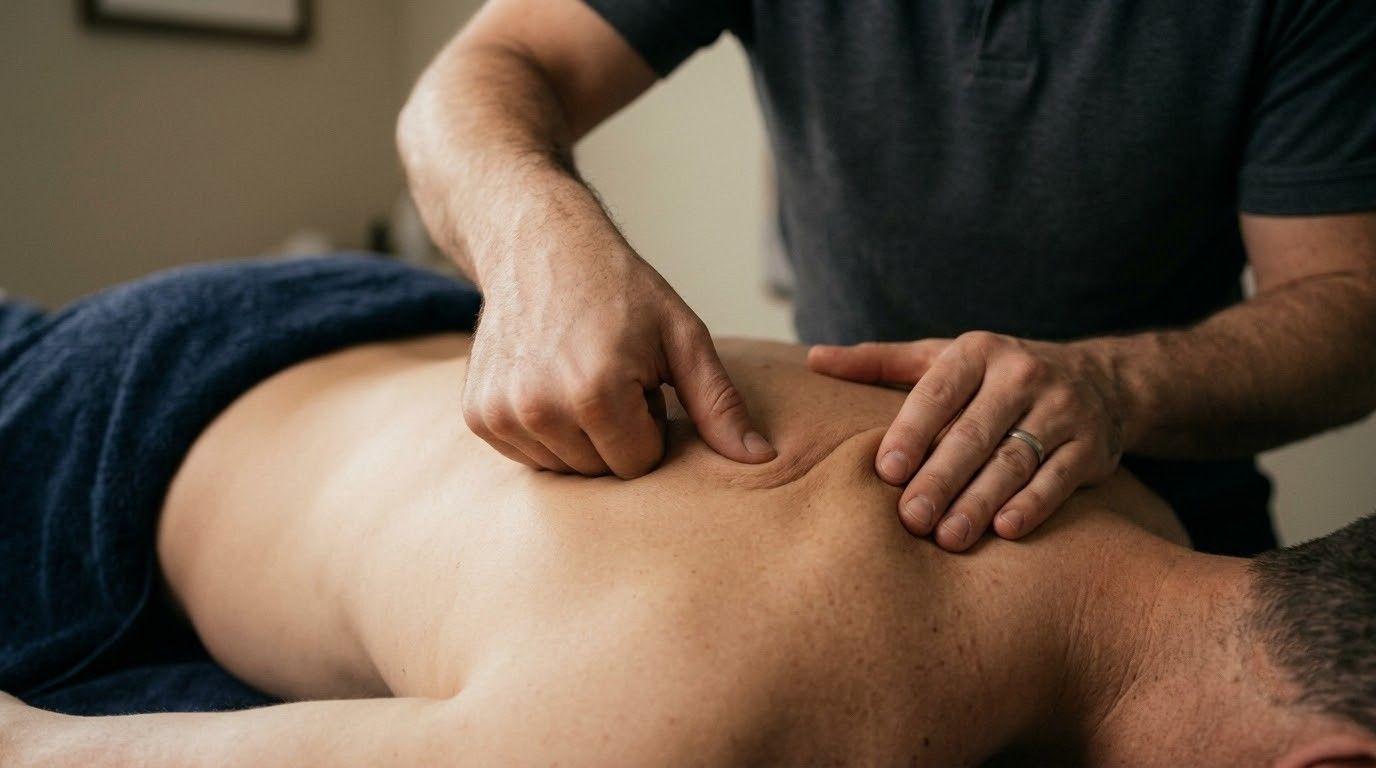
ARM RELIEF
Shoulder and Arm Referral Treatment
Shoulder pain that radiates into the arm or neck frequently comes from trigger points around the shoulder blade and upper back. Locating and compressing those points can reduce the traveling discomfort and restore easier, fuller movement through the arm again.

HIP POINTS
Lower Back and Hip Trigger Points
Aching in the lower back, buttocks, or down the leg can originate in trigger points within the hip and gluteal muscles. We palpate carefully to find the ones reproducing your symptoms and release them with sustained, patient, well-controlled compression.
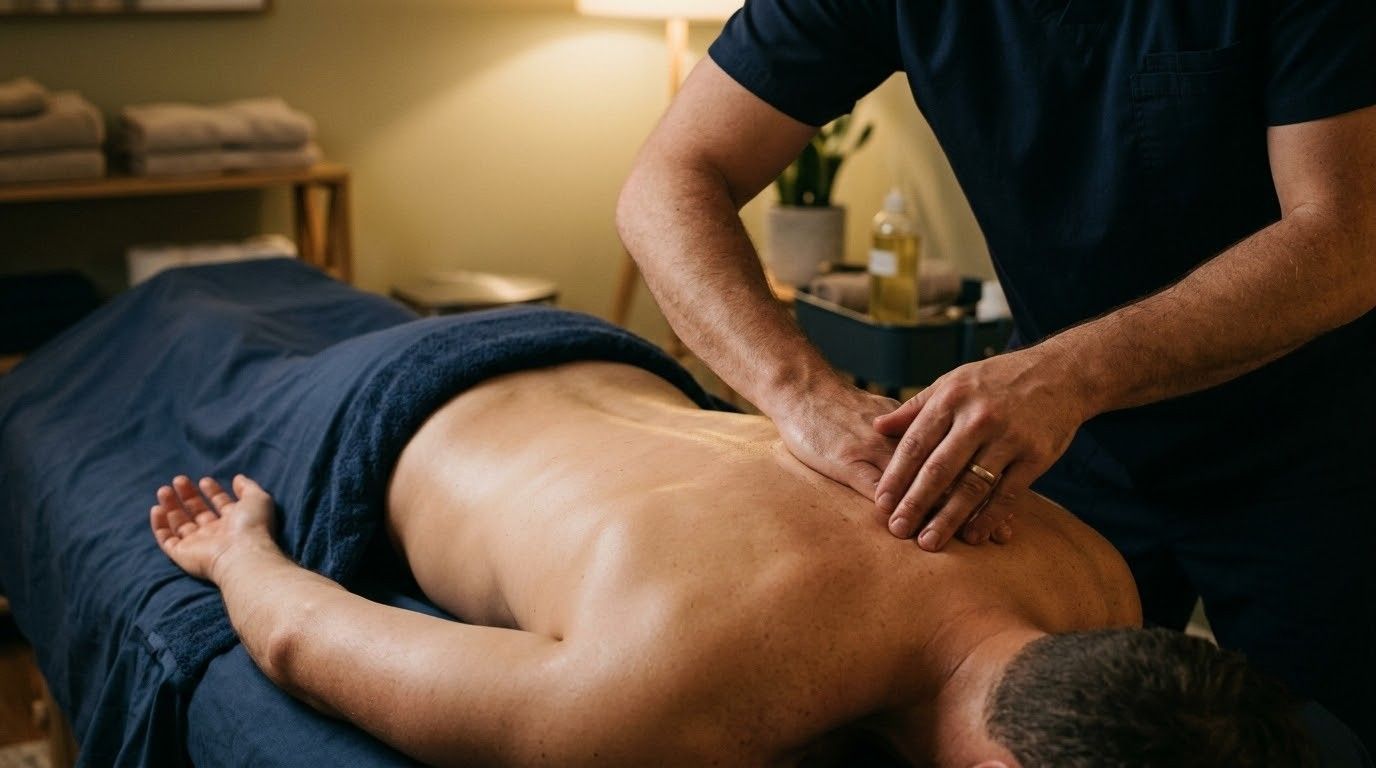
DEEP PAIRING
Trigger Point Therapy With Deep Tissue
Pairing trigger point work with deep tissue massage addresses both the specific knot and the tight muscle surrounding it. This combination suits clients with widespread tension who also carry one or two stubborn points that refer pain elsewhere.
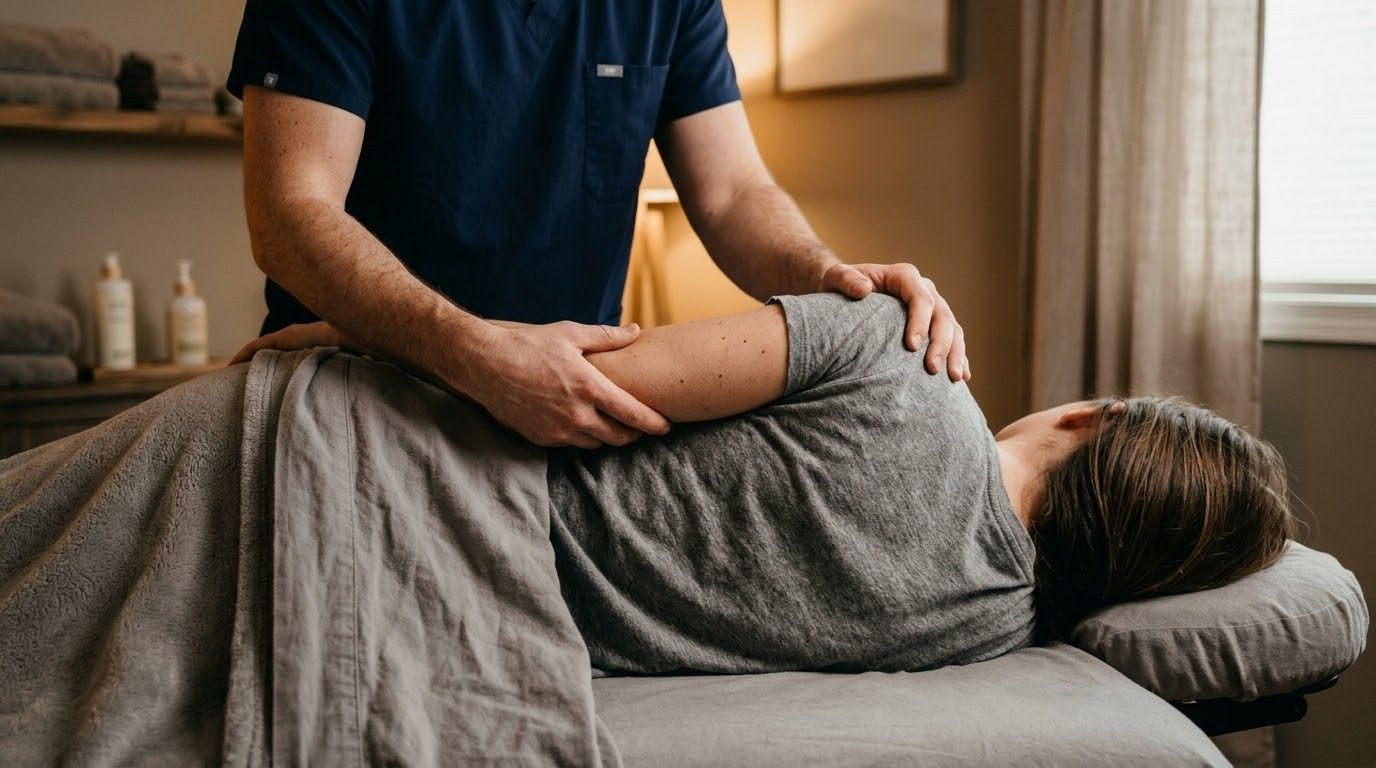
PREP WORK
Heat and Stretch-Assisted Release
Certain tissue releases more easily when it is warm and slightly lengthened. We may apply heat or gentle stretching before compression, which helps the muscle soften faster and makes the pressure itself feel more manageable throughout the treatment.

POINT SERIES
Chronic Trigger Point Treatment Series
Long-standing trigger points often need several sessions spaced a week or 2 apart. We track which points are improving, adjust the plan as your symptoms change, and suggest posture, movement, and strengthening habits that help prevent those points from returning.
THE WORD ON OUR WORK
WHAT OUR CLIENTS SAY.
Some of our most enthusiastic reviews come from clients who spent years chasing pain before someone found the knot behind it. Our Google reviews mention attention to knots and a therapist who finds issues others missed. Read those experiences before you book your first trigger point session.
FAQ
FREQUENTLY ASKED QUESTIONS.
Many people living with trigger points are confused by pain that appears far from its source. Below, we explain how points are found, why pain travels, and how quickly relief usually follows.
How does a therapist find a trigger point?
Your therapist finds trigger points by palpation, feeling for tender nodules or taut bands within the muscle. The key sign is pressure reproducing your familiar pain, sometimes in a distant area. Your feedback confirms when the spot has been found.
Why do trigger points cause referred pain?
Trigger points send signals along shared nerve pathways, so the brain can interpret the pain as coming from a different area. That is why a knot in the upper trapezius may create pain at the temple or behind the eye.
What does trigger point release feel like?
Expect firm, focused pressure on the knot that feels sharp or achy at first, then fades as the tissue gradually softens. Many people call this sensation a good hurt. Pressure should never become unbearable, and you can ask for adjustments.
How long does it take for trigger points to go away?
Recent trigger points may ease within 1 to 2 days of a session, while chronic ones need several visits. At Hyde Park Massage in Tampa, FL, we space sessions a week or 2 apart and track which points are responding.
Can trigger points cause headaches?
Yes, trigger points in the neck, shoulders, and jaw are a recognized contributor to tension headaches. Points in the upper trapezius refer pain to the temple and behind the eye. Frequent or severe headaches should be evaluated by a doctor.
What causes trigger points to form?
Most trigger points develop from poor posture, repetitive motion, muscle overload, stress, and periods of inactivity. Sitting at a desk, carrying heavy bags on one shoulder, and sudden strain during exercise are frequent culprits that keep muscle fibers locked tight.
Should you massage trigger points every day?
Gentle self-massage can help between sessions, but daily aggressive pressure may irritate the tissue. Hyde Park Massage in Tampa, FL, suggests brief, moderate pressure followed by gentle stretching, then letting the area rest rather than pressing harder every single day.
Is trigger point therapy the same as deep tissue massage?
No, trigger point therapy targets specific knots with sustained compression, while deep tissue massage works broader muscle layers with slow strokes. The two often complement each other, and many sessions combine them to treat a knot and its surrounding tightness.
HOW WE WORK
FROM REFERRED PAIN TO ITS SOURCE, HERE IS HOW.
STEP 01
WE MAP YOUR PAIN PATTERN
We ask where your pain appears, where it travels, when it gets worse, and what has already been tried. That description becomes our map, pointing us toward the muscles most likely to be harboring the responsible trigger points.
STEP 02
WE PREPARE THE TISSUE
When helpful, we apply heat or gentle stretching to warm and lengthen the muscle before targeted work begins. Prepared tissue responds more readily to compression, which makes the release faster and the pressure easier to tolerate.
STEP 03
WE PALPATE FOR THE SOURCE
Using our fingers, we feel through the muscle for tender nodules and taut bands. When pressure on a spot reproduces your familiar symptoms, even in a distant area, we know we have located an active trigger point.
STEP 04
WE COMPRESS AND HOLD
Next, we apply sustained pressure with fingers, thumbs, or elbows for 10 to 30 seconds. The sensation is often sharp or achy at first, then fades as the knot begins to release under the steady, controlled pressure.
STEP 05
WE CONFIRM THE RELEASE
After each hold, we recheck the point to see whether it has softened and whether your referred pain has changed. Stubborn points may need another round, while released ones allow us to move on to the next.
STEP 06
WE HELP IT STAY RELEASED
To close, we suggest posture, movement, or strengthening changes that reduce the strain behind your trigger points. For chronic patterns, we schedule follow-up sessions a week or 2 apart to keep your progress moving forward.
BOOK YOUR SESSION
STOP CHASING THE ACHE AND TREAT THE SOURCE.
Rubbing the spot that hurts can only do so much when the real problem sits somewhere else. Hyde Park Massage offers trigger point therapy in Tampa, FL, that follows your pain back to its origin, releases it with precise compression, and pairs every session with practical advice to keep it from returning. Sessions typically run 60 minutes and can cover one point or several. Reserve your visit online or send us a message through our contact form.
WHAT YOUR SESSION COVERS:
✓ A detailed pain pattern review
✓ Heat or stretching as needed
✓ Palpation for active trigger points
✓ Sustained, targeted compression
✓ Rechecks after every release
✓ Posture and habit recommendations